
37% Lighter Trolley Cart for FleetPride — Validated in Ansys
The Challenge
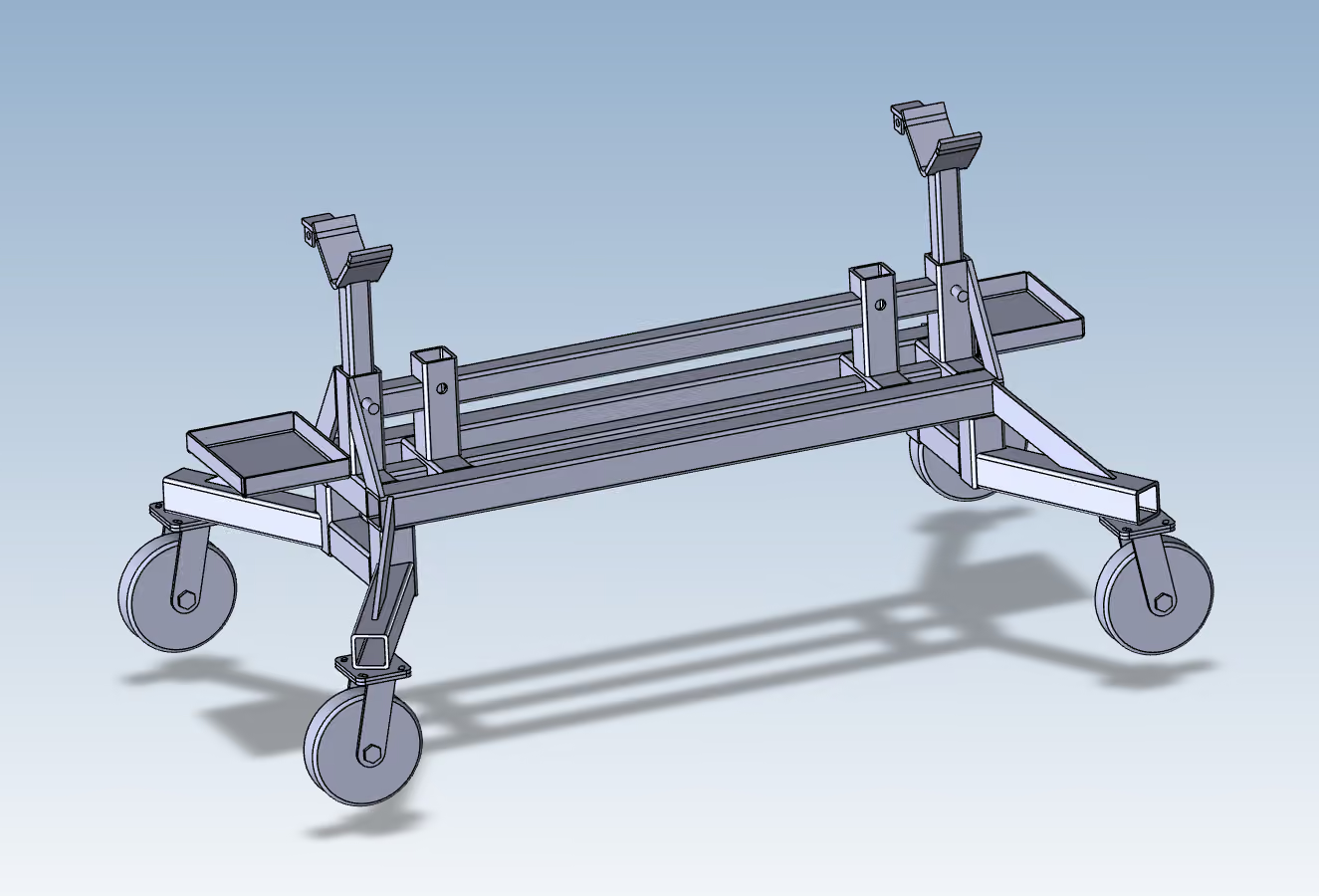
FleetPride's axle trolley carts were overbuilt. At 210 lbs, they were hard to maneuver, fatiguing for staff, and costly to fabricate. The goal: cut weight significantly without sacrificing the 1,000 lb rated load capacity or durability.
What We Did
We modeled the existing cart in SolidWorks and analyzed it in Ansys using its actual materials — ASTM A36 steel for the square pipes, ASTM A500 for the remaining structure. The simulation showed exactly where the design was over-engineered.
Over six design iterations, we resized members, optimized cross-sections, and removed redundant material — re-verifying every change in Ansys.
The Results
The final design passed Ansys verification at 2,500 lbs — two and a half times its rated load. Even at that load, maximum equivalent stress was just 9,357 psi (roughly a quarter of A36 steel’s 36,000 psi yield strength) with total deformation of only 0.005 in — confirming a robust safety margin before any prototype was built. FleetPride gets a cart that is easier to push, cheaper to fabricate, and just as strong.
Have an over-engineered product? Contact us at cadcam.org — simulation-driven optimization can make it lighter, cheaper, and stronger.