
Blogs
Discover the latest CAD, 3D modeling, scanning, and more updates. Dive into our articles and stay informed to enhance your expertise in the field.
When it comes to learning all about aircraft 3D models CATIA, you should understand that a certain amount of basic knowledge of the software is very important It is important to understand that in order to initiate any sort of 3D aircraft models in CATIA, it is...
7 Tips for R2V Image Conversion Most of the time, the raster images that customers send us for conversion are images that they’ve scanned from original mylar or paper drawings. When we get an image like this, the first thing we look at is the quality of the raster...
While conventional ways of drafting mechanical engineering designs have been used for decades, it wouldn’t be smart to admit that in modern times we’ve invented technology assisted ways that enable us to achieve a higher magnitude of accuracy and...
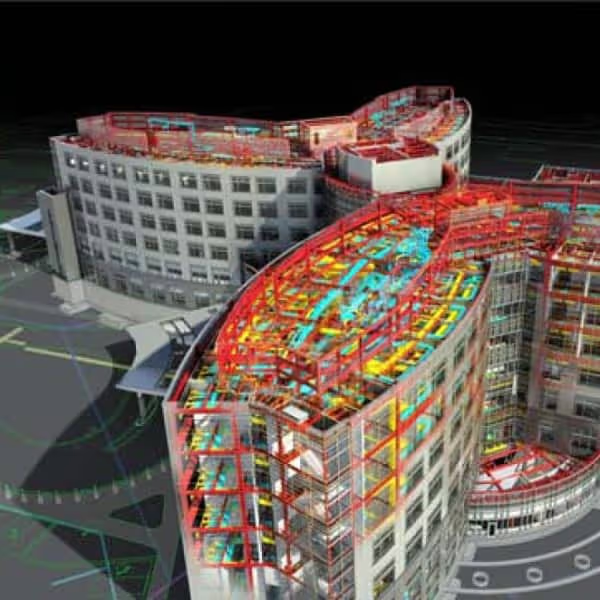
Designers working with AutoCAD software may need to convert those AutoCAD drawings into a BIM model. According to AutoDesk, the leader in technical design software, “BIM is an intelligent model-based process that provides insight to help you plan, design, construct, and manage buildings and infrastructure.”

BIM conversion can be a huge undertaking for any organization that has large numbers of drawings. Yet, more and more, 3D is the way to go, so manufacturers, architects, and others are looking at ways to convert their legacy paper drawings or CAD drawings into 3D BIM Models.
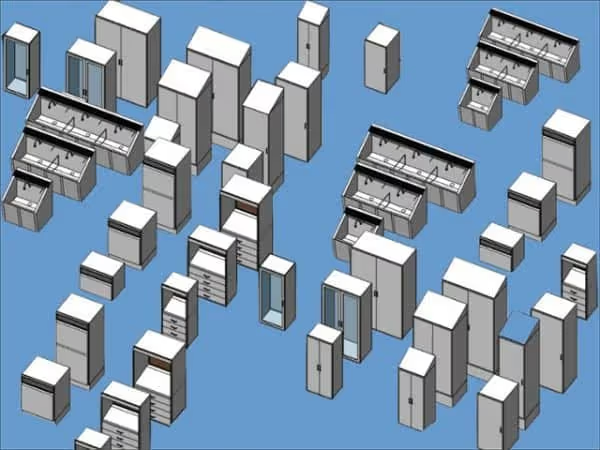
Just as architects and designers embraced Building Information Modeling (BIM) in the early part of the 21stcentury, nearly 20 years later, BIM for manufacturing has become equally important. At first glance, it may be difficult to see how BIM, typically used in the construction space, can apply to manufacturing. Indeed, it is the very ubiquity of BIM in construction that requires any company that manufactures products used in construction to use BIM.