
Blogs
Discover the latest CAD, 3D modeling, scanning, and more updates. Dive into our articles and stay informed to enhance your expertise in the field.
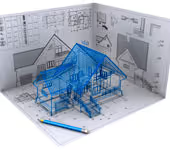
Compared to a traditional construction process, BIM could benefit constructors in many ways by simplifying estimating tasks, by enhancing value engineering, identifying conflicts, facilitating communication between team members and scheduling tasks. It is also reducing change orders or RFIs. And these result in increased efficiencies decreased waste that ultimately for contractors and their subs lead to greater profit.
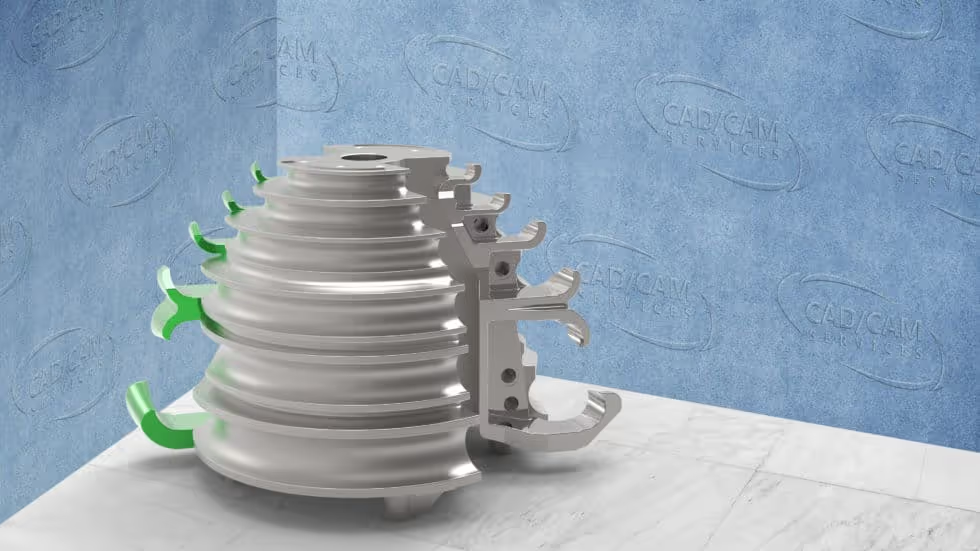
No matter what you need – there is always a way to achieve your CAD-related goals. Learn more about cutting edge CAD software SolidWorks, Autocad, CATIA, Creo, Siemens NX. Find out about CAD-related services in the aerospace and automotive industries.
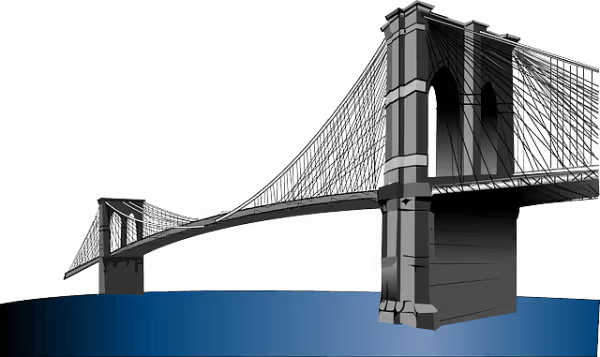
Bridge-building requires both art and science – especially for bridges that must span massive distances while being able to withstand tons of traffic, the possibility of earthquakes, high winds, and other tests of strength and design.

Using computers to facilitate or assist design has existed since the mid-1900s. The term “Computer-Aided Design” (CAD) was born in the 1950s and credited to Douglas Ross, who worked at MIT when the abbreviation was coined.
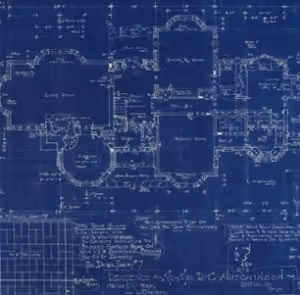
In addition, ISO 13567 establishes rules for modifying the layer format itself, in the event that national standards bodies or specific projects may desire to do so. As long as these rules are followed, the CAD data set is considered to be in conceptual conformance with the ISO standard, which is an approved alternative to default conformance.

Through reverse engineering, an engineer tries to understand the machine or system parts in terms of design, construction as well as composition where applicable. Upon gathering all necessary information and details of all the parts of the machine, it can then be redesigned in order to come up with a new product/machine.